

Search engines are among the most frequently used tools on the internet, serving as the primary gateway to information for billions of users worldwide. Whether searching for news, educational resources, services, products, or answers to everyday questions, users rely on search engines to navigate an ever-expanding digital landscape that would otherwise be impossible to explore manually.
Every search query represents a moment of trust, as users expect search engines to deliver relevant, accurate, and useful information. Despite this reliance, many users remain unaware of how search engines function behind the scenes or how decisions about visibility and ranking are made.
Understanding how search engines work empowers users to search more effectively, evaluate information critically, and interact with online content responsibly. This awareness transforms searching from a passive habit into an intentional digital skill.
What Is a Search Engine?
A search engine is a complex software system designed to locate, organize, and present information from across the internet in response to user queries. Rather than scanning the entire web in real time, search engines rely on vast prebuilt indexes containing information about billions of web pages.
These indexes act like massive digital libraries, allowing search engines to retrieve relevant results almost instantly. When a user submits a query, the search engine analyzes the words used, interprets intent, and retrieves matching pages from its index.
The retrieved results are then ranked according to relevance, quality, credibility, and usefulness. This entire process occurs within fractions of a second, demonstrating the scale and sophistication of modern search technologies.

Search engines act as digital guides, helping users locate information across billions of web pages.
How Search Engines Discover Content
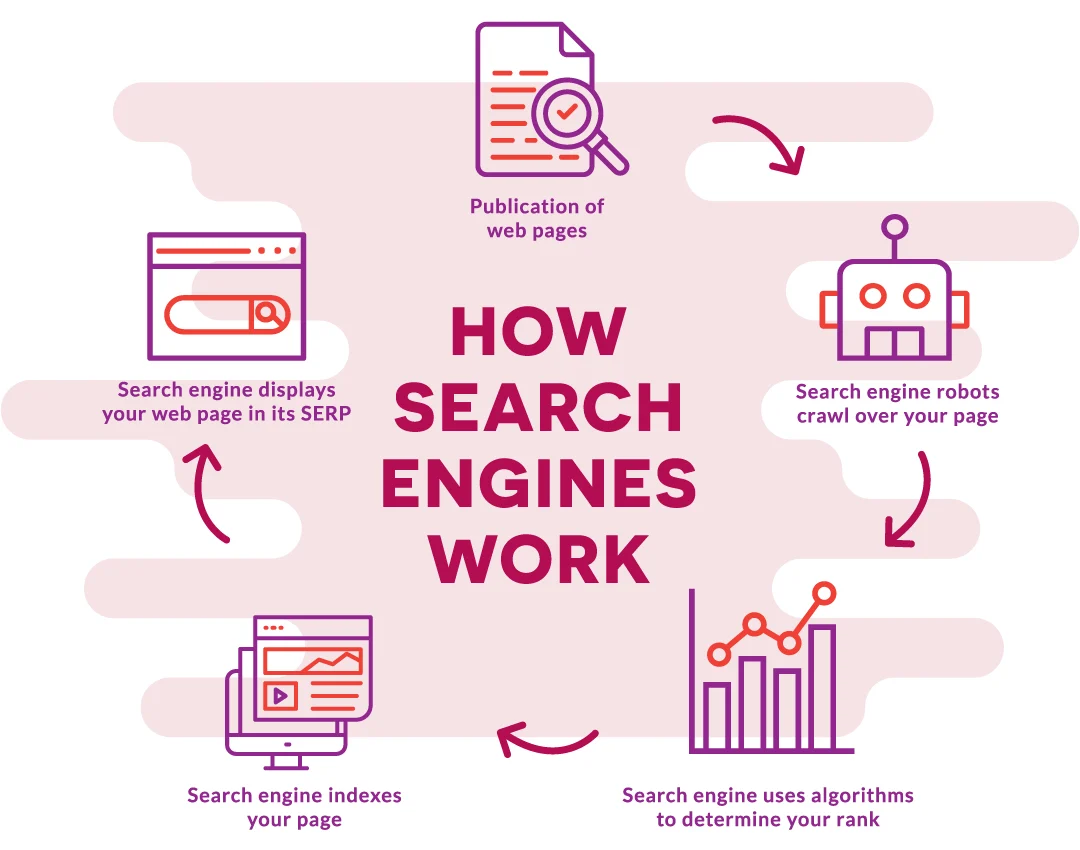
Search engines discover new and updated content using automated programs commonly known as crawlers, spiders, or bots. These programs systematically explore the internet by following links from one page to another, collecting data about content, structure, and connections.
Crawlers continuously revisit known pages to detect changes and search for new content. Websites that are well-organized, accessible, and properly linked are easier for crawlers to navigate, increasing their visibility within search engine indexes.
If a page cannot be accessed easily due to technical issues, poor structure, or restricted access, it may not appear in search results at all. This highlights the importance of accessibility and transparency in web design.
Understanding Indexing and Ranking
Indexing is the process of storing and organizing collected web pages so they can be retrieved quickly when needed. During indexing, search engines analyze page content, headings, links, and metadata to understand what each page is about.
Ranking determines the order in which indexed pages appear in search results. Search engines evaluate numerous factors, including relevance to the query, clarity and depth of content, source authority, usability, and overall user experience.
It is important to recognize that search rankings are not neutral lists of facts. They are algorithmically generated selections shaped by design choices intended to prioritize usefulness and reliability. This makes critical thinking essential when interpreting search results.

Before results appear, search engines organize and rank information behind the scenes.
Why Search Results Differ Between Users
Search results may vary from one user to another based on factors such as geographic location, language settings, device type, and previous search activity. These signals help search engines tailor results to specific contexts and perceived user needs.
Personalization can improve relevance and convenience, but it may also limit exposure to diverse perspectives. Users should be aware that their search experience is shaped by algorithms and may not represent a complete or neutral view of available information.
Recognizing these differences encourages users to explore multiple sources, adjust search settings when necessary, and actively seek broader viewpoints.
Responsible Searching and Information Evaluation
Effective searching involves more than entering keywords and clicking the first result. Responsible users take time to evaluate sources, consider credibility, and verify information across multiple reputable websites.
Understanding the difference between factual reporting, opinion pieces, sponsored content, and promotional material is essential. Search engines may display a mixture of these content types, making user awareness a key factor in informed decision-making.
By approaching search results thoughtfully, users can reduce exposure to misinformation and strengthen their digital independence.
“Search engines guide our access to knowledge, but awareness determines how wisely we use them.” – Web Users Guild
Why Search Engine Awareness Matters
Search engine awareness strengthens digital literacy by helping users understand how information is organized, prioritized, and presented. It encourages users to question visibility, recognize bias, and seek reliable sources.
This awareness reduces susceptibility to misinformation, promotes ethical information consumption, and supports responsible participation in online spaces.
Conclusion
Search engines play a central role in how information is accessed and understood online. While they offer powerful tools for discovery and learning, they also shape visibility, influence perception, and guide digital behavior.
By understanding how search engines work and engaging with them critically, users can navigate the web more confidently and responsibly. WebUsersGuild encourages search awareness as a foundational digital skill for informed exploration, ethical web use, and lifelong digital learning.
Leave a Reply